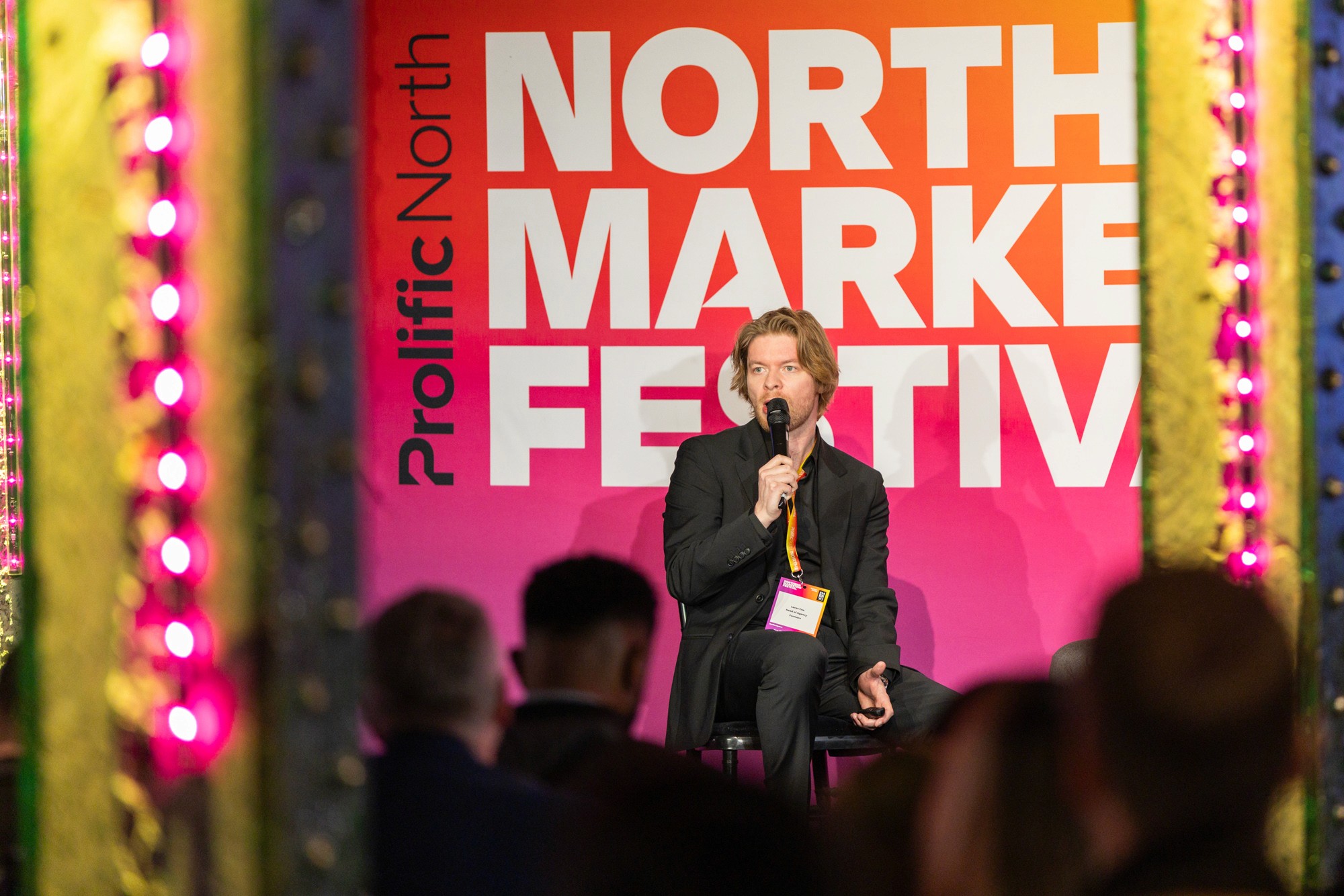
Formore™ recently took to the stage at Northern Marketing Festival in Manchester, joining marketers, brand leaders and creative thinkers for a day of discussion around the future of marketing.
For us, it was a brilliant opportunity to talk about something that has a huge impact on the quality of creative and marketing work, but often does not get enough attention: the brief.
A brief might seem like the starting point of a project. In reality, it is much more than that. It shapes the strategy, the creative direction, the campaign structure, the quality of the final work and, ultimately, the results.
As a creative marketing agency in Manchester, we see this every day. The strongest work nearly always starts with the clearest thinking.
Why bad briefs still happen
Bad briefs are rarely created through bad intentions.
More often, they happen because teams are moving quickly. People assume everyone understands the objective. Conversations happen across too many channels. Key details are missed. Expectations are not fully defined. The project begins before the problem has been properly understood.
That is when things start to drift.
A vague brief can make even the best team look average. It can lead to unclear creative, slow delivery, more rounds of amends, confused feedback and campaigns that never quite land.
The issue is not always a lack of effort. It is usually a lack of structure.
A good brief gives everyone the same starting point. It defines the audience, the objective, the message, the commercial goal, the timescale, the budget and the measure of success. Without those foundations, marketing can quickly become a collection of outputs rather than a focused piece of work.
And outputs are not the same as ideas.
The cost of starting with a weak brief
One of the biggest problems with a bad brief is that it can feel easier to keep going than to stop and fix it.
Projects gather momentum. Timelines get tight. Teams want to be helpful. Clients want to see progress. So everyone pushes forward.
But pushing ahead with a weak brief rarely saves time in the long run.
It usually creates more rounds of feedback, weaker creative routes, unclear sign-off, mismatched expectations and campaigns that are harder to measure. It can also put unnecessary pressure on the relationship between client and agency, because the team ends up trying to solve a problem that was never properly articulated in the first place.
For any brand working with a creative agency in Manchester, a marketing agency in Manchester or an internal marketing team, this is an important point: the quality of the brief has a direct impact on the quality of the output.
If the brief is unclear, the work will have to fight harder to succeed.
Simple briefs are usually the strongest
There is a temptation to think that a good brief needs to be long, complicated or filled with marketing language.
It does not.
The strongest briefs are often the simplest. They clearly explain the challenge, define the audience, set the objective and make it obvious what success should look like.
A good marketing brief should answer:
What are we trying to solve?
Who are we trying to reach?
What do they currently think, feel or do?
What do we want them to think, feel or do next?
What is the single most important message?
What are the commercial objectives?
How will success be measured?
What are the timings, budget and mandatories?
Those questions may sound obvious, but they are often the questions that get skipped when everyone is moving quickly.
The point of a brief is not to restrict creativity. It is to give creativity direction.
Better briefs create better collaboration
A brief should not just be a document passed from one person to another. It should be a shared process.
The best briefs are built through conversation. They allow space for questions, challenge and clarification before the work begins. They help everyone understand not only what needs to be created, but why it matters.
That collaborative process is vital.
A brand brings its knowledge of the business, audience and commercial pressures. An agency brings outside perspective, strategic thinking, creative craft and channel expertise. The brief is where those two things come together.
When that part of the process is done properly, the work has a much better chance of being clear, distinctive and effective.
Why structure matters more than ever
Marketing is moving quickly.
Channels are changing. Search behaviour is shifting. AI is accelerating production. Brands are expected to produce more content, more campaigns, more emails, more landing pages and more social assets than ever before.
But more activity does not automatically create more impact.
If the thinking behind the work is weak, the output becomes noise.
This is why the briefing stage matters so much. The brief is where the thinking is sharpened. It defines what the brand needs to say, who it needs to reach and why the audience should care.
Without that clarity, marketing can become reactive. With it, brands can build stronger campaigns, better creative platforms and more consistent recall.
Why this matters for Manchester brands
Manchester has always had a strong mix of creative energy and commercial ambition.
It is a city full of businesses that want to move quickly, grow, compete and stand out. But in a crowded market, speed alone is not enough. Marketing needs direction.
As a creative marketing agency based in Manchester, Formore™ works with ambitious brands across strategy, creative, digital, social, SEO, CRM and websites. Whether we are building a campaign, planning paid media, developing content or creating a new website, the work always starts with clarity.
That means understanding the audience.
Understanding the objective.
Understanding the story.
Understanding what the brand needs to be remembered for.
Because marketing that lacks clarity is easy to ignore. Marketing built on a strong brief is much harder to miss.
The takeaway from Northern Marketing Festival
Northern Marketing Festival was a brilliant reminder that while the tools, channels and platforms around marketing are changing quickly, the fundamentals still matter.
Clear thinking matters.
Good communication matters.
Strong creative direction matters.
Better briefs matter.
The most effective marketing is rarely the result of rushing straight into production. It comes from taking the time to understand the problem properly, define the objective clearly and create work with a purpose.
Bad briefs create confusion.
Better briefs create better work.
And better work is what helps brands become more memorable.
At Formore™, that is what we are focused on: helping ambitious brands build lasting recall through strategy, creative, digital, social, SEO, CRM and websites.
If you are looking for a creative agency in Manchester or a marketing agency in Manchester that can help sharpen your strategy and create work people remember, we would love to talk.