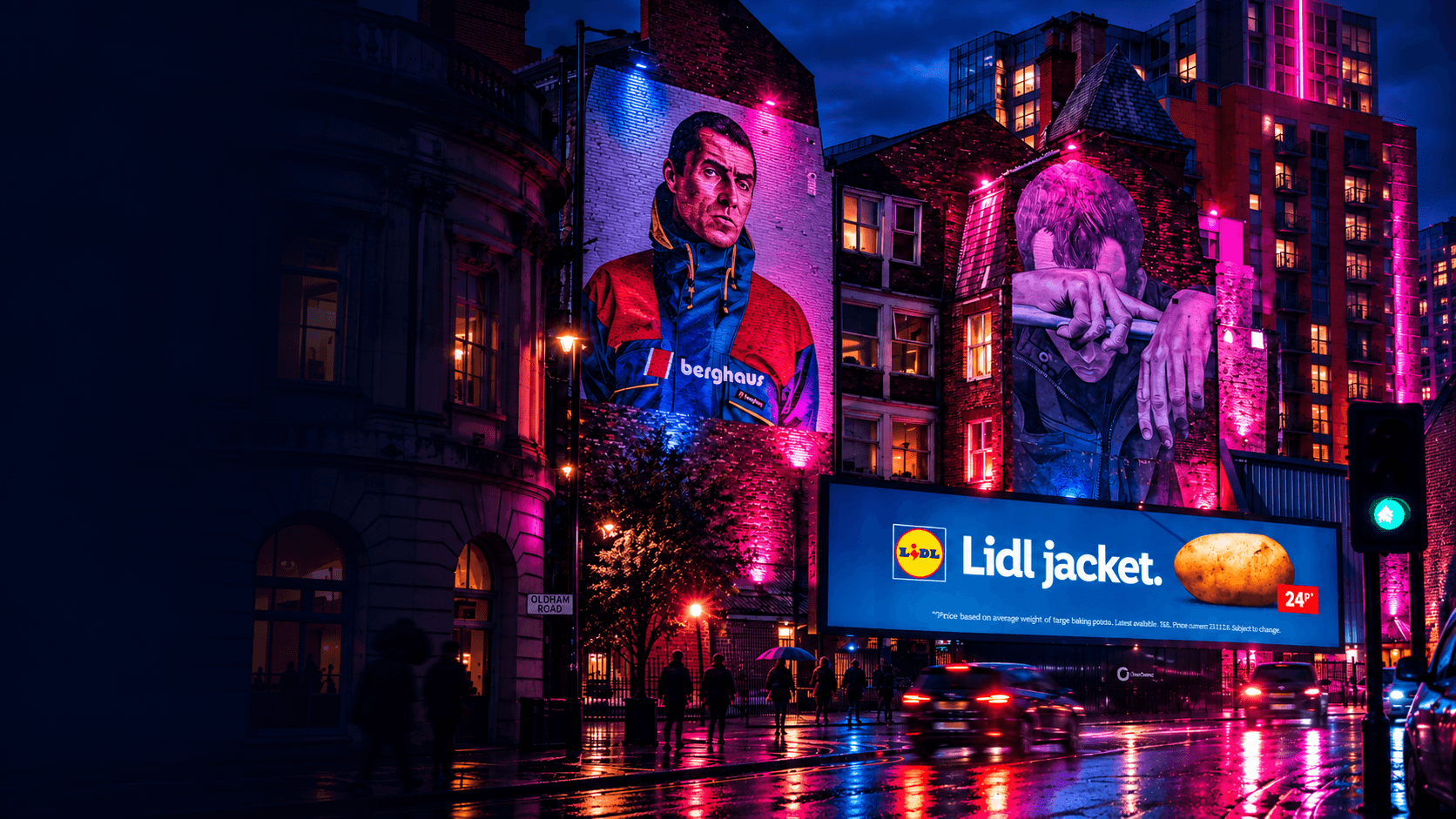

Manchester has always understood the power of an idea
Manchester’s creative economy did not suddenly appear when somebody moved a few agencies into converted warehouses. The city has been built on ideas for centuries. The Industrial Revolution made Manchester synonymous with manufacturing at extraordinary scale. But around that industrial engine grew newspapers, publishing, political movements, architecture, engineering, music, design and new forms of commerce. It became a place where making things and communicating ideas were closely connected. That matters because successful creative economies rarely exist in isolation. They grow where culture, commerce, technology and people overlap. Manchester has had that overlap for a very long time. The products have changed. The instinct to make, experiment and challenge things has not.
Creativity is now part of Manchester’s economy, not just its identity
Manchester’s creative reputation is easy to romanticise. The economic evidence makes the story more interesting. Greater Manchester’s creative industries contribute more than £1.4 billion in economic value and support more than 48,000 jobs. Advertising and marketing sit alongside film and television, music, design, software, publishing, fashion and the arts as part of that wider ecosystem. Creative Industries have also been identified by Greater Manchester as one of five priority sectors with particularly strong potential for future growth. The others include Digital, Cyber and AI, Advanced Materials and Manufacturing, Health Innovation and Life Sciences, and Low Carbon. That positioning matters. It means creativity is not simply treated as something that makes Manchester more culturally interesting. It is part of the region’s economic strategy. For marketers, designers and creative businesses, that distinction is important. Manchester is not simply a city that likes creativity. It has built a significant economy around it.

MediaCity changed the scale of Manchester’s creative economy
It is difficult to talk about modern Manchester’s creative industries without looking west towards Salford Quays. The development of MediaCity created a creative and broadcasting centre of a completely different scale. The BBC’s move north was the headline moment. But the effect became much broader. MediaCity is now home to the BBC, ITV and more than 250 media, creative and technology businesses. That level of concentration creates its own gravity. Broadcasters need producers. Production companies need editors. Brands need content. Content needs studios. Studios need crews. Digital products need designers and developers. Everybody needs strategists, photographers, animators, writers, account teams, researchers and specialists. One major creative investment creates demand for an entire network of businesses around it. Over time, that network becomes an industry cluster. Manchester increasingly has one.
But Manchester’s creative strength is not contained in one shiny development
The other side of Manchester’s creative economy feels almost like the opposite of MediaCity. Walk through the Northern Quarter or Ancoats and the industry becomes smaller, messier and more independent. Design studios sit above shops. Developers work alongside brand strategists. Production companies occupy former industrial buildings. Freelancers move between agencies, start-ups and established brands. There are photographers, filmmakers, illustrators, copywriters, developers, designers, musicians, strategists and creative businesses occupying the same relatively small part of the city. That density matters. Creative economies function through employment, but they also function through networks. People meet. People recommend each other. People change jobs. Someone leaves an agency and joins a brand. Two people leave a company and start something new. A freelancer builds a team. A side project becomes a business. Skills, relationships and ideas circulate. Manchester’s creative advantage is not simply the number of companies based here. It is the proximity between them.
Manchester has always been comfortable with independent thinking
There is another ingredient that is harder to capture in an economic report. Manchester has a long history of not waiting for permission. You can see it in politics. You can see it in music. You can see it in nightlife, fashion, design and entrepreneurship. Factory Records did not behave much like a conventional record label. The Haçienda did not behave much like a conventional nightclub. Manchester’s music scene repeatedly produced things that felt distinctly Manchester rather than reproductions of whatever was happening somewhere else. That independent streak translates surprisingly well into marketing and brand strategy. Good strategists need to question assumptions. Good creative people occasionally need to challenge the brief. Good businesses need to understand where convention is useful and where it becomes a constraint. And challenger brands rarely beat established competitors by becoming slightly smaller versions of them. They need a reason to be noticed. Perhaps that is one reason Manchester feels particularly comfortable with challenger brands. The city understands the attraction of doing things differently.
Challenger brands rarely win by becoming slightly smaller versions of the market leader.

Marketing and technology are becoming impossible to separate
It is becoming increasingly difficult to draw a neat line around the creative industries. Is a social campaign advertising, entertainment or content? Is an ecommerce website technology, design or marketing? Is an AI-powered customer experience a technology product or a creative one? Usually, it is several things at once. That makes Manchester particularly interesting. Greater Manchester has identified both Creative Industries and Digital, Cyber and AI as areas of strategic growth. The overlap between the two is increasingly where interesting things happen. Marketing teams now work with developers. Designers work with data. Creative teams work with media platforms. CRM combines technology, psychology and communication. Web experiences combine user experience, branding, copywriting and engineering. AI is beginning to alter production, research, media buying, personalisation and search. The traditional boundaries between creative, marketing and technology make less sense every year. Manchester has significant communities in all three. That gives the city an increasingly useful advantage.
Talent keeps feeding the system
Creative clusters need people. Manchester has an unusually strong pipeline. The University of Manchester, Manchester Metropolitan University, the University of Salford and other specialist institutions continuously bring students and graduates into the region. Courses cover areas including marketing, advertising, design, fashion, journalism, film, television, animation, photography, digital technology and software. Some graduates leave. Many stay. But the more significant change is what happens later. Manchester increasingly offers people the ability to build substantial careers in the creative industries without automatically having to move to London. That creates depth. Graduate talent enters the market. Experienced people remain in it. People move between agencies, brands, broadcasters, technology businesses and independent studios. Knowledge moves with them. Eventually, expertise compounds.
Manchester is big enough to specialise
There is another advantage to having a large creative ecosystem. Specialisation. A small market can support a handful of generalist marketing companies. A larger market can support specialists. Brand studios. Paid media agencies. SEO specialists. PR consultancies. Production companies. Social media agencies. Influencer specialists. Motion studios. CRM consultants. Photographers. Researchers. Web developers. UX designers. Strategists. Sound designers. Copywriters. That depth matters because modern marketing is complicated. Very few businesses are genuinely world-class at every discipline. A healthy creative ecosystem allows organisations to find specialist expertise rather than expecting everything to come from the same place. It also creates competition. Talented businesses are surrounded by other talented businesses. That raises expectations. Mediocre work has somewhere better sitting next to it. That is healthy.
Manchester is also a serious commercial city
Creative industries need clients. Manchester has plenty. The city and wider region have developed one of the UK’s most substantial large-city economies. In 2026, Manchester City Council highlighted figures showing employment across Manchester and the wider city-region had increased by 19.7% over the previous decade, compared with 13.9% nationally. The city also has around 244,000 jobs in knowledge-intensive business services, a level reported as second only to London among major UK cities. That commercial economy creates demand for marketing. Technology. Hospitality. Retail. Property. Professional services. Healthcare. Manufacturing. Education. Ecommerce. Financial services. Sport. Start-ups. International businesses. All of them need to compete. All of them need customers. And all of them need ways of communicating what makes them worth choosing. Creative industries thrive when ambitious organisations sit nearby. Manchester has a lot of them.

Then there is Manchester’s relationship with brands themselves
Manchester is not simply somewhere marketing agencies happen to operate. Brands and culture have interacted here for decades. Football alone makes Manchester one of the most globally visible city brands in Britain. Music has carried the Manchester name around the world. Fashion businesses have emerged from the region. Hospitality businesses have used the city as a testing ground. Technology companies have scaled from here. Independent businesses sit alongside multinational organisations. That mixture creates an interesting marketing environment. There are businesses trying to establish themselves. Businesses trying to scale. Businesses trying to reinvent themselves. And major organisations trying to remain culturally relevant. Those are different strategic problems. A strong marketing ecosystem develops when people repeatedly have to solve them.
Challenger brands and challenger cities have something in common
Perhaps there is another reason Manchester and marketing fit together particularly well. For much of its modern history, Manchester has existed alongside somewhere bigger. London has more people. More headquarters. More media. More capital. More institutions. More everything. That creates a particular mentality. You cannot rely entirely on scale. You need a reason for people to pay attention. Challenger brands face the same problem. They usually enter a market with less awareness, less distribution, fewer customers and smaller budgets than the incumbent. They cannot simply rely on being present. They have to become memorable. They have to be distinctive. They have to find an angle the established player has overlooked. Manchester has spent a long time doing something similar.
If you cannot rely on scale, you need to give people another reason to remember you.

That challenger mentality can be creatively useful
This does not mean shouting louder. In fact, that is often the least interesting interpretation of challenger marketing. Being a challenger means understanding the rules of a category well enough to know which ones should be kept and which ones can be challenged. Sometimes that means a radically different brand. Sometimes it means a better customer experience. Sometimes it means speaking with a tone competitors would never use. Sometimes it means concentrating on a group the category has ignored. Sometimes it simply means being much clearer. Manchester’s best creative output has often worked in a similar way. It has borrowed influences without becoming defined by them. It has respected established industries while creating alternatives to them. It is a city with relatively little interest in behaving exactly as expected. For people trying to build distinctive brands, that is useful territory.
Distribution matters as much as creativity
There is a romantic version of the creative industries where somebody has a brilliant idea and the rest takes care of itself. Marketing rarely works that way. Ideas need distribution. A great campaign nobody sees is still a campaign nobody sees. This is another reason the scale of Manchester’s ecosystem matters. Creative businesses exist alongside media specialists, digital agencies, PR teams, publishers, broadcasters, technology platforms, event businesses and production companies. The creative idea and the mechanism for getting it in front of people increasingly live in the same ecosystem. That becomes particularly important for challenger brands. An established business often has years of awareness already stored in people’s memories. A challenger does not. It has to create the memory and distribute it. Creative earns attention. Distribution gives that creative enough opportunities to become familiar. The strongest marketing does both.
The city is big, but the creative community still feels surprisingly small
Manchester is now a major city economy. But the creative industry often feels much smaller. People know one another. Former colleagues reappear at different companies. Agencies collaborate. Freelancers work across multiple businesses. People who competed for one pitch might work together on another project six months later. That connectivity matters. It creates reputation. It also creates accountability. If you intend to work in the same relatively connected industry for ten or twenty years, relationships matter. So does the quality of your work. That does not make the industry perfect. No creative industry is. But it gives Manchester something difficult to manufacture artificially. Community.
Why Manchester works particularly well for marketing agencies
Put all of those ingredients together and Manchester’s attraction to agencies becomes clearer. There is a substantial commercial economy. A deep creative workforce. A large university population. Broadcasting infrastructure. Technology businesses. Independent studios. Major brands. Start-ups. Music. Fashion. Sport. Hospitality. Global companies. Freelancers. Production talent. And a dense network of businesses servicing one another. Manchester is large enough to support serious specialism but compact enough for those different communities to overlap. That is a useful combination for marketing. Not because every brilliant marketer lives in Manchester. They obviously do not. And not because excellent creative businesses cannot be built somewhere else. They obviously can. Manchester simply has many of the conditions that make creative industries more likely to flourish.
Manchester does not need to become the next London
Comparisons with London are almost unavoidable when discussing the UK’s creative industries. They are also slightly boring. Manchester’s opportunity is not to reproduce London on a smaller scale. Its advantage comes partly from not being London. Different economics. Different culture. Different geography. Different networks. Different industries. A different relationship between large institutions and independent businesses. The strongest cities eventually understand the same thing that the strongest brands do. You do not become distinctive by reproducing the category leader. You understand what is genuinely different about you and build from there. Manchester has spent a long time doing exactly that.
A city built on making things
Manchester’s output has changed dramatically over the past two centuries. The mills are no longer producing cotton at the scale that made the city famous. But the instinct behind them feels strangely familiar. Make something. Improve it. Challenge what already exists. Find an audience. Take it somewhere else. Today the products might be brands, films, campaigns, digital experiences, software, businesses, music or ideas. The machinery changed. Manchester kept making.